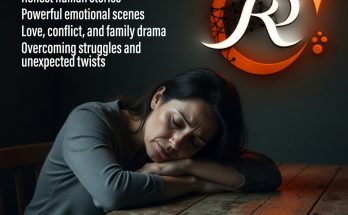
I was the girl my parents wanted most — a third child, a daughter. But from the moment I was adopted into a family with two older brothers and six cousins, something didn’t feel right. I wasn’t welcomed as a sister. I was the outsider.
Only my parents and my grandfather ever showed me real kindness. Everyone else treated me like I didn’t belong. I wasn’t as pretty as the girls in the family, not as skilled as the boys, and I certainly wasn’t part of the joyful laughter at family dinners. I was the invisible one, the shadow.
As the years passed, that feeling of not belonging grew heavier. My brothers and cousins excelled — trophies, praise, attention — while my efforts went unnoticed. Recognition didn’t matter anymore; I just wanted to belong.
Then, everything changed on my sixteenth birthday. My aunt and uncle planned a family trip to the coast and, as usual, left me behind to watch the house. It was familiar — but that evening everything fell apart.
The phone rang. A police officer delivered news that shattered my world: my aunt and uncle had died in a car accident. Gone. Just like that. I was alone again. I tried to breathe through the shock, grief flooding every thought.
The police arranged for me to stay with a distant relative — someone I barely knew. Their kindness was polite, but hollow; it wasn’t love. Still, something shifted inside me. I knew I couldn’t live as the girl everyone ignored.
I enrolled in school, got a part‑time job, and slowly carved out a life of my own. I didn’t want pity or attention — I just wanted independence. For the first time, I felt in control of my path, not defined by what others saw in me.
I learned that recognition doesn’t come when others notice you — it comes when you notice yourself. Strength isn’t born from comfort; it’s born from surviving what breaks you.
Then one day, out of the blue, I got a call. A cousin — the first from my childhood family to reach out in years. His voice was different this time: sincere, apologetic. He said what I never expected: he was sorry.
At first, I didn’t know how to respond. Part of me wanted to say all the things I’d held inside for years. But another part — the part that had grown strong — simply listened. I thanked him. I wasn’t ready to forgive, but it felt good to be seen.
In the weeks that followed, more cousins and even my brothers reached out. They admitted their regrets and asked for a chance to reconnect. What once was cold and distant started to warm with apologies and honest conversation.
And through it all, I realized something powerful: the love I’d longed for didn’t have to define who I became. I wasn’t the invisible girl anymore. I was someone who survived, someone worthy of love and respect — starting with myself.